How to Navigate Our Website and Competition Directory: Everything You Need to Know
A Backstage Guide to Understanding Our Website’s Competition Directory
Preparing for a performance, match, or showcase is an incredibly exciting journey, but finding the right competition can feel overwhelming when you are scrolling through dozens of listings with different rules, formats, and requirements. Whether you are an athlete looking to step onto the stage for the first time or a coach preparing a group entry, our competition directory is designed to make that process effortless, putting all the key event information you need right at your fingertips. To help you get the most out of our website, here is a quick breakdown of the terms and some of the filters you will encounter across our competition listings.
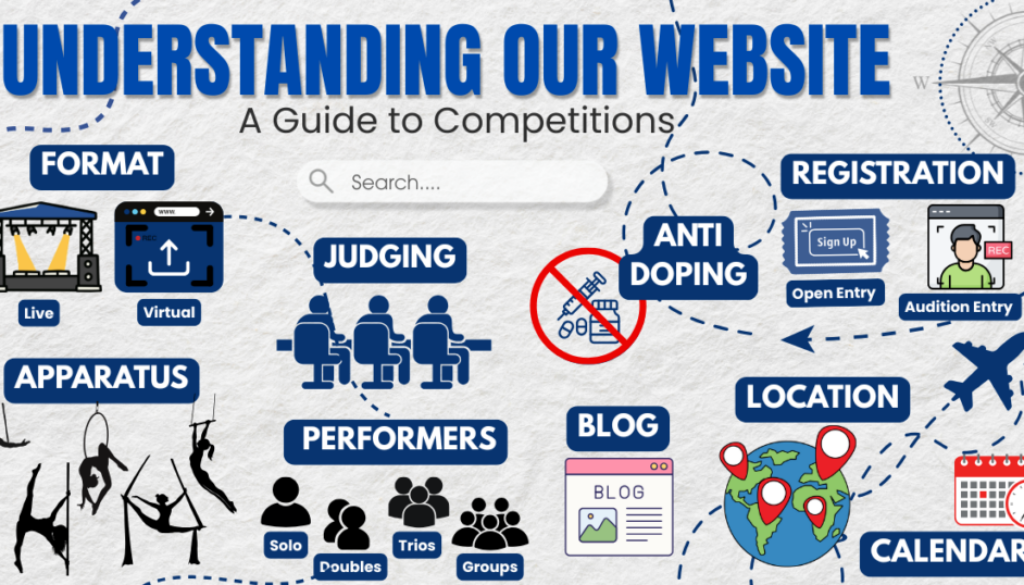
1. Format (How Competitors Compete)
The Format tells you how the competition takes place:
- Live: An in-person event. You’ll travel to the venue, experience the stage, and perform directly in front of an audience and judging panel.
- Virtual: An online (often streamed) performance. For virtual events, you will submit a recorded video of your routine by a specific deadline to be evaluated by the judges. Some competitions will compile all of the submissions and then stream the entire competition on a future date.
2. Apparatuses
Every discipline relies on specific equipment. This field highlights the exact apparatuses supported by the competition (such as pole, aerial silk, lyra, straps, invented apparatus, etc.. learn more about apparatuses here). Double-check this tag to ensure your specific discipline is included before diving deeper into the rules.
3. Performer Count
Competitions cater to different team dynamics. The Performer Count specifies how many people are allowed on stage for a single act. Common categories include:
- Solo: A single performer.
- Doubles: A duo performance.
- Trios: A three-person routine.
- Groups: Small to large teams performing together.
4. Registration Type
When you’re ready to enter, this field lets you know exactly what the path to the stage looks like:
- Open Entry: The doors are open! Anyone meeting the basic category criteria can enter by registering and paying the entrance fee directly on a first-come, first-served basis.
- Video Entry (Audition): Competitive spots are limited or require qualification. For these events, you must submit a preliminary audition video to try out before being officially accepted into the lineup.
5. Anti-Doping Requirements
For professional-level competitions, fairness and safety are paramount. Some events require athletes (and sometimes their coaches) to hold an anti-doping license from accredited organizations like WADA (World Anti-Doping Agency) or WHEA (World Heavy Events Association).
Want a deeper look into what this means for you? Read our dedicated blog post about understanding anti-doping here.
6. Website & Country
- Website: A direct link to the event’s official home page where you can check rules, register, purchase tickets, and view specific event schedules.
- Country: Where the competition is physically held. Keep a close eye on this, as some events are geographically restricted and only open to residents of that specific country.
7. Next Competition Date
Timing is everything! This tells you exactly when the next event is scheduled so you can plan your training block accordingly. If a historic event is no longer running or on hold, we’ll label it as Inactive so you always have the most up-to-date data.
8. Blog with Competitor, Training, Coaching & Judging Insights
We don’t just want to tell you when the events are—we want to help you be successful at them! Our blog is packed with insider knowledge to give you a competitive edge. Here, you’ll find:
- Competitor Insights: First-hand experiences and tips from athletes who have previously graced these stages.
- Training & Preparation Advice: Tailored workout regimens, staging preparation, and equipment-specific tips to make sure your routines are seamless.
- Coaching & Judging Perspectives: Understand what is happening behind the scoring table. Learn exactly what judges look for, how scoring criteria are applied, and coaching strategies to elevate your score sheet.
Ready to Find Your Next Event?
Now that you know how to read the blueprint, it’s time to find your spot in the spotlight. Head over to our directory, filter by your format and apparatus, and start planning your next great performance!